The premier aid and development organization of the Catholic Church in the United States is partnering with the U.S. government to deliver nearly a quarter-billion dollars in aid to East Africa, where nearly 70 million people are facing food insecurity.
Catholic Relief Services (CRS) and the US Department of Agriculture (USDA) have agreed to a joint initiative delivering as much as $235 million in emergency food and nutrition assistance to the millions of people facing multiple converging crises in Sudan and Ethiopia, Crux Now has learned.
A deadly cycle of drought and flooding over the past 15 years, coupled with frequently violent instability and supply chain disruptions stemming from local and global conflicts, has left millions of people across the region teetering on the brink of starvation.
“This agreement helps ensure families in Ethiopia and Sudan have access to the food they need during a time of extraordinary hardship,” CRS president and CEO Sean L. Callahan told Crux Now ahead of the public announcement of the initiative.
Callahan said CRS has been “a proud partner of USDA for decades,” in regular conversation with the department about “the best way to partner with them and use food aid as a tool to save lives and help communities move forward on a pathway to prosperity.”
“Assistance to these two countries,” he said, “has come up naturally within this ongoing conversation.”

USDA’s Deputy Under Secretary for Trade and Foreign Agricultural Affairs, Michelle Bekkering, also spoke to Crux Now ahead of the announcement.
She said CRS is the right partner for the job.
“CRS has an established food assistance response presence in the region through the Sudan Emergency Project and Joint Emergency Operation (Ethiopia),” Bekkering said.
CRS has been present in East Africa for more than 60 years, involving both international and local workers in the organization’s ongoing efforts to serve people in remote and challenging areas.
“CRS has proven capability to deliver food assistance in insecure and high-risk environments,” Bekkering said.
Under the terms of the agreement, USDA will purchase U.S. commodities and CRS will make requests through USDA procurement systems, standard practice in the area.
“These will be competitively procured similar to our other international food assistance programming,” Bekkering said of the arrangement, which is designed also to benefit U.S. agricultural producers.
While the precise sorts of foodstuffs are yet to be determined, Bekkering told Crux Now USDA relies on high-quality commodity basket offerings that meet agency standards.
“This typically includes a mix of U.S.-grown fortified grains, pulses, and vegetable oils tailored to meet the immediate nutritional needs of vulnerable populations,” she said.
Bekkering also told Crux Now the $235 million sum “represents the whole figure to Catholic Relief Services for work in Sudan and Ethiopia – including commodity purchase, commodity transport, and program implementation costs.”
“Each country will have a separate agreement,” she said, “with a different total value subject to final negotiations.”
Sudan: Converging crises, particular challenges
Since 1955, Sudan has been at war with itself almost constantly.
In 2005, a 22-year conflict ended in the permanent division of the country into two new sovereign states, Sudan and South Sudan, both of which have continued to suffer internal conflict.
A bitter and long-simmering struggle for power between Sudanese military factions that had overthrown the country’s government in 2021 erupted into full-scale fighting in 2023.
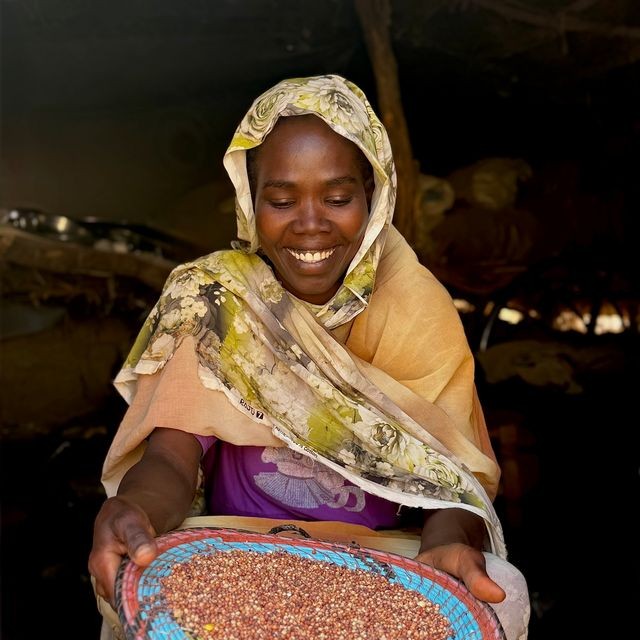
Violence, displacement and severe humanitarian shortfalls have combined to create catastrophic conditions in several areas of the country, with nearly a million children under the age of 5 facing severe acute malnutrition this year.
The decades of violence have also caused massive displacement, with 9 million people forced from their homes – in a country with a population of roughly 52 million – while ongoing conflicts in the Middle East and in Ukraine have disrupted supply chains and driven up prices for food, fuel and fertilizer.
The fighting has claimed millions of lives over more than seven decades and created what is widely recognized as the worst humanitarian crisis in the world today.
Ethiopia: Ethnic conflict and ecological disruption
In Ethiopia, a territorially diverse land with a population of 138 million people, a two-year civil war in the Tigray region disrupted agriculture in significant portions of the country, and locust infestations combined with severe recurrent drought to trigger the latest crisis.
High unemployment, endemic poverty, and rising food prices make it difficult for many people in the largely agrarian country to purchase sufficient nourishment even when food is available.
Ethiopia also hosts more than a million refugees from neighboring and nearby countries including Sudan, South Sudan, Somalia, and Eritrea.
The cost of efficiency: US politics and global security
U.S. assistance has played a critical role in tackling poverty and hunger around the world for more than 75 years, but the Trump administration in early 2025 decided effectively to shutter the US Agency for International Development (USAID).
USAID had been chiefly responsible for U.S. aid distribution – leading to major global aid gaps. Aid and development organizations were sharply critical of the cuts, which also gravely affected CRS, once a top recipient of USAID support.
“The changes to U.S. foreign assistance affected CRS’s footprint and programming levels,” Callahan told Crux Now.
“[W]e made the difficult decision to close some programs and offices,” he said, but “CRS remains committed to serving vulnerable communities around the world.”
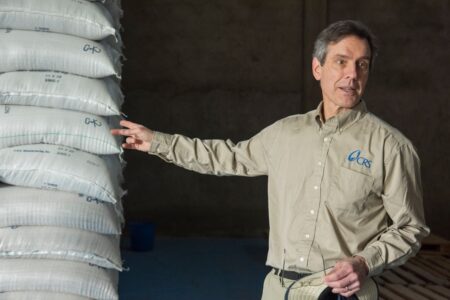
The Trump administration’s rationale for the decision was complex and involved a widespread belief – not entirely without basis in fact – that USAID had both drifted afield of its core security mission and embraced ideological causes.
In any case, the decision left the $1.2 billion Food for Peace program with no institutional home until the end of 2025, when an interagency agreement backed by lawmakers moved the program to USDA.
“We are grateful for USDA’s continued commitment through Food for Peace, which reflects enduring bipartisan support for addressing global hunger,” Callahan said.
Bekkering explained that USDA is “redefining the way that Food for Peace is being implemented.”
“The guiding principles defining our work include: commodities procured must be 100% U.S. origin; strict accountability measures to prevent fraud, waste, abuse; and long-term dependency on foreign aid will be reduced,” she said.
Bekkering also said USDA is “coordinating closely with the U.S. State Department as it implements Food for Peace.”
“CRS welcomed the chance to engage in earnest regarding opportunities for continued partnership in the Food for Peace Program once it was publicly announced at the start of the year that USDA would be administering the program through an interagency agreement,” Callahan said.
“We welcomed the chance to dive into specifics when it was appropriate,” he said, “and are so grateful the agreement has come together and hope that the conversation continues to move forward as quickly as possible.”
Efficiency and accountability
Both the USDA and CRS agree that efficiency and accountability are crucial to successful aid and development programs, a fact they say makes the partnership make sense.
“CRS has worked in both Ethiopia and Sudan for many years through trusted local partners, faith communities and other humanitarian organizations,” Callahan told Crux Now. “Those long-standing relationships allow us to adapt to changing conditions while maintaining strong oversight and accountability,” he said.
Bekkering told Crux Now accountability is built into the system and the partnership with CRS.
“As a key component of the America First approach,” she said, “accountability is being enforced through all available mechanisms,” notably among them requiring recurring financial and programmatic reporting, strong monitoring efforts via U.S. Foreign Service Officers, and in-country third-party monitoring.
The USDA partnership with CRS takes the form of a grant, Bekkering explained, meaning the money becomes available “as soon as awards are signed and will be disbursed as the implementor requests an advance or reimbursement.”
“This is standard practice for grant agreements,” Bekkering said, “and enhances accountability and oversight.”
She said USDA is also requiring enhanced commodity monitoring plans and is binding grant agreements to the usage of government-wide regulations, and is binding grant agreements to applicable Foreign Agricultural Service General Terms and Conditions and USDA General Terms and Conditions for Federal Awards, which are embedded in the agreements.
Callahan said CRS tracks food commodities through the supply chain “to the last mile,” and employs “robust monitoring, verification and financial oversight to help ensure assistance reaches the people it is intended to serve.”
“We continually assess security conditions,” Callahan said, “adjust operations as needed and work closely with local partners,” to ensure that aid gets to the people who need it most.
For millions of vulnerable people across East Africa who are struggling to feed their families as they also try to recover from converging crises and rebuild their lives as they stave off starvation, the help can’t come fast enough.
Follow Chris Altieri on X: @craltieri